7 PROVEN FACTORS IN THE FORMULA FOR INDIE GAME SUCCESS
What makes a successful indie game?
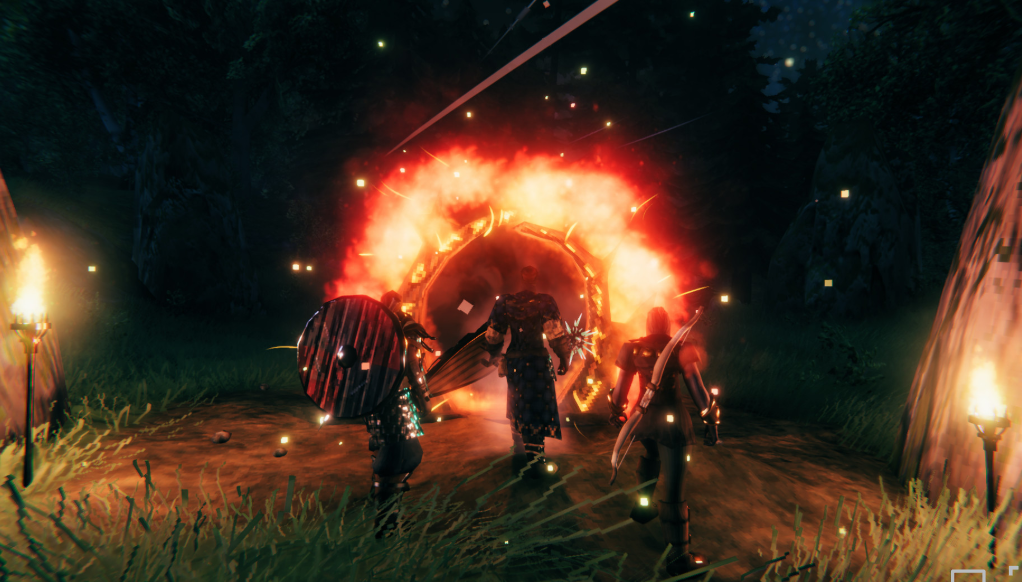
(Picture above: Screenshot from the epic game Valheim on Steam. The front cover was a screenshot of the 1991 classic Another World, which is also available on Steam with a remastered 20th-anniversary edition. )
Jamieson Lee Hill, Video Game Story Writer, Friday, March 27th, 2026
Summary: What makes a successful indie game?
Why are innovation and creative identity important in indie games?
Creative identity and innovation help indie games stand out in crowded markets
How does storytelling improve player engagement in indie games?
Storytelling gives players purpose, emotional connection and long-term engagement
What game mechanics make indie games successful?
Strong core mechanics create a simple, repeatable loop that drives retention
Why is community engagement critical for indie game growth?
Community engagement fuels visibility, feedback and organic growth
How do indie games use merchandising as part of the formula for success?
Merchandising turns a game into a scalable brand with additional revenue streams
How do indie teams communicate and stay aligned during development?
Clear team communication ensures alignment across design, story and development
Why do indie games need strong infrastructure and servers?
Reliable infrastructure supports performance, scalability and player satisfaction.
Key Takeaways
- Successful indie games are built on a clear core mechanic, strong creative identity and player-focused design.
- Long-term growth comes from community engagement, smart monetisation and scalable infrastructure.
- Indie studios succeed by refining simple ideas and executing them consistently, not by adding complexity.
Introduction: How have indie games evolved from the 1970s to today?
My personal gaming journey
Having lived through five decades of gaming, I have seen indie game development evolve from simple titles into global successes. My first experience was on a Binatone console in the late 1970s, where games were little more than moving dots. In the 1980s, I played on the BBC Micro, Spectrum 48k, and Sega Mega Drive. I was still on my Sega in the 1990s, but then switched to Nintendo 64 in the mid-90s. Then, about 1999, I changed to PC gaming and never looked back, but I still have a PS2 and 50 games at home. In 2020, I entered the gaming industry as an editor and then a Story Writer.
How have indie games evolved from the 1970s to today?
Technically, indie games began in the 1970s and early 1980s with solo programmers building titles for machines such as the Apple II, TRS-80 and Commodore PET. In the 1990s, shareware and the rise of PC distribution allowed developers to reach players directly without relying on publishers. Even then, the foundations of indie development were clear: small teams, creative freedom and experimentation.
The modern indie boom arrived in the late 2000s with digital platforms like Steam. Titles such as Minecraft and Stardew Valley proved that small studios could compete globally through strong ideas, not large budgets.
Today, indie development is one of the most innovative parts of the gaming industry. The tools are more accessible, distribution is global, and community engagement is built into the process. What has not changed is the core principle: indie games succeed by focusing on creativity, not scale. This is central to the formula for indie game success.
Let’s explore 7 aspects of the formula for success in indie games:
1. Why are innovation and creative identity important in indie games?
The visual and auditory identity of a game can be just as important as its gameplay. Music stirs the soul and sets the atmosphere before launching into battle in a jungle, fighting for survival in an FPS, or traversing the wilds in an open-world fantasy game.
As a Game Writer, I love hearing the compositions by game music artists and the brilliant voiceover artists who bring the characters to life. Likewise, the art, animation and aesthetics of video games mean a lot to the gaming community.
Some games are absolute works of art. In crowded digital storefronts, a distinctive art style can determine whether a player even clicks on a game to learn more.
The formula for indie game success usually includes:
• Unique visual aesthetics
• Strong atmosphere and environmental design
• Memorable soundtracks and audio design
Whether through pixel art, stylised 3D graphics, or hand-drawn illustrations, creative identity helps a game establish a recognisable presence. Without the limitations on decision-making that AAA studios impose, indie games are more able to innovate freely and pursue originality.
Four aspects come to mind:
- A willingness to experiment is a defining characteristic of indie games.
- Innovation does not always mean inventing an entirely new genre. Often, the most effective approach is to take a familiar idea and introduce a single twist that changes the experience.
- A simple gameplay loop or mechanic can become compelling when placed in a new context or combined with a different ruleset. Many successful indie titles build their appeal around a clear concept that players understand quickly but continue exploring over time.
- Identifying the core hook of the game and refining it until it becomes deeply satisfying to play is the key.
The Alto Enigma
Alto’s Adventure is a sublime snowboarding adventure across alpine landscapes while rescuing llamas and chaining tricks. Part of its formula for indie game success is simplicity. When I think of classic indie games such as Alto’s Adventure and Alto’s Odyssey, they epitomise originality in artistic terms.
They are both beautifully crafted games with haunting music; the aesthetic of the Alto series is something of great beauty and otherworldliness. Less is more in this Zen-like classic. Indie studio Snowman, in collaboration with Harry Nesbitt, focused on clarity of design, atmosphere, and long-term player experience rather than feature overload.
Co-founder of Snowman, Ryan Cash, was playing Ski Safari nonstop when he was sick for a long period of time. This was a major inspiration for Alto’s Adventure. When you actually look at the game mechanics of Ski Safari and Alto’s Adventure 2015, there are a lot of similarities, e.g. skiing over jumps, collecting coins, whizzing down slopes at high speed, etc., etc.
The game mechanics are familiar, but it is a wonderfully crafted world of art, animation and music that sets it apart creatively.
Alto’s Odyssey (2018) refined that formula, shifting to a desert setting with new physics and tone, proving that strong concepts scale through iteration, not reinvention. To this day, I still love both of the Alto games.
What separates the series is its discipline:
- Minimalist design: no excess UI or mechanics, just a clean, focused loop
- Atmosphere as gameplay: dynamic weather, lighting, and music shape the experience
- Accessible depth: one-touch controls, but high skill ceiling through timing and flow
- Distinct artistic identity: instantly recognisable, widely imitated
2. How does storytelling improve player engagement in indie games?
The iterative process of story writing is about experimentation, researching and adapting until you find the story's magic to captivate your audience. As an Indie Game Story Writer, I know this process well.
Giving the player a why
The whole purpose of the story is to give the main character a reason for what they are doing, e.g. saving a princess from a deadly dragon, seeking revenge on enemies, etc.
When a player has motivation for the character’s journey, the game becomes more meaningful. Remember that games are cyberworlds where people run to escape the tedium and monotony of daily lives, so they should be carefully crafted.
What successful storytelling involves
Story development in games often starts with lore and worldbuilding and includes:
• defining the history and mythology of the game world
• developing character and monster/enemy backstories and motivations
• outlining narrative arcs and side stories
• creating environmental storytelling elements that players discover naturally during gameplay
I have recently joined a new gaming studio, and this is exactly the process I will undertake. In some projects, storytelling goes beyond the game through social media or short prose, expanding the world and atmosphere.
In fact, for two of the games I have worked on in recent years, I also wrote posts for social media and the website to expand the lore.
Four Games From Four Decades
Here are 4 indie game titles which epitomise successful storytelling. One of them is with visual storytelling only. I have chosen one indie game from each decade since 1980 that really stood out for its story.
1980s: Prince of Persia (1989)
Mostly developed by one person, Jordan Mechner, Prince of Persia introduced cinematic storytelling at a time when most games were purely mechanical. With realistic animation and pacing, it created tension and narrative immersion around a simple rescue storyline. Jordan explains how he made the game in this video.
1990s: Another World (1991)
This game is iconic in indie game storytelling. I remember playing it in the 90s on SEGA. I recently bought the 2011 mobile version for research for this article. It still shines.
Another World is beautiful and unique because it uses visual storytelling rather than relying on dialogue. In that sense, it was a game-changer in reinventing how stories could be told by removing dialogue and interface entirely.
The overall effect is a game which feels more immersive with the ambiguous narrative experience left to your own interpretation.
2000 to 2010: Braid (2008)
Braid is a groundbreaking and surreal platform game that takes a familiar rescue story and quietly deconstructs it. Time manipulation is part of the narrative of the game. In that sense, Braid demonstrated that indie games could go deeper, with more philosophical themes and still keep the player engaged.
The game mechanics are in many ways those of a classic platform game, but the deep and rich story takes the gamer on a much deeper narrative experience.
2011 to 2026: Disco Elysium (2019)
Disco Elysium stands out as an epic achievement in indie game RPGS. It is regarded as a high point in indie narrative design, with writing that operates at the level of serious literature.
The player builds identity through choices and internal dialogue, making the story feel highly personal and intellectually complex.
Two Quotes on Story Writing in Games
I read an excellent article on Game Design by Alexander Brazie, who worked on big titles like World of Warcraft and League of Legends. Two quotations struck me as worthy inclusions in a discussion about the formula for indie game success.
“Character is the nexus of story and gameplay,” by Mohammad Alavi
Allow your gamer to feel emotional empathy with the character and a desire to take on their mission, and that is half the formula for a successful game. Without character motivation, a game falls flat.
“The story comes only after the core of the game system is completed,” by Shigeru Miyamoto
The second quote from the Master Game Designer, Miyamoto, surprised me, as I have always been involved with the story-first approach. Miyamoto's games Super Mario Bros. (1985) and The Legend of Zelda (1986) helped the Nintendo Entertainment System dominate the console game market.
While not an Indie games producer, he is a master in the field of game design for mass market gaming. Certainly, this is food for thought for any indie studio.
For indie developers, strong worldbuilding turns a simple game into a world players return to, shaped by memorable characters and experiences.
A successful indie game will live long in the hearts of gamers for decades afterwards.
3. What game mechanics make indie games successful?
Successful indie games are built on one clear principle: a simple core mechanic that is easy to learn, but deep enough to sustain long-term engagement. The most effective titles do not rely on graphics or scale. They succeed because their systems are clean, repeatable and satisfying over time.
During my research, this video by Indie Game Clinic ‘Game Mechanics and Systems Thinking’, these were the main takeaways concerning game mechanics:
Start with Core Mechanics, Not Features
Successful indie games focus on one or two strong player actions (jump, shoot, build) and make them feel exceptional. Everything else is built around that.
Understand the Role of Every Mechanic
Top-performing games don’t just copy ideas. They understand why a mechanic exists and how it supports progression, challenge, or player motivation.
Prioritise Game Feel Early
The best indie titles lock in the feel of core actions early. Small tweaks to timing, feedback, and responsiveness define whether a game feels good or forgettable.
Build Systems Around Proven Interactions
Mechanics come first, systems come second. Successful teams prototype gameplay before investing time in complex systems like progression or procedural generation.
Design for Player Experience, Not Realism
Indie hits focus on the outcome: fun, tension, mastery. Mechanics are chosen to create that emotional response, not to simulate reality.
Minecraft
A strong example is Minecraft, which demonstrates how powerful mechanics can drive global success. At its core, Minecraft is built around a single loop: mining, crafting and building. Every system in the game expands naturally from that foundation, creating a cohesive and scalable experience.
Let’s unpack the game mechanics of this title that started life as an indie game before the Microsoft takeover.
Game Mechanics As a Formula for Success in Minecraft
One core mechanic executed well
A single, clearly defined loop forms the foundation of the entire Minecraft experience, i.e. dig, mine, build, etc. Research into indie game performance shows that titles built around a single clear gameplay loop consistently outperform feature-heavy games in player retention.
Mechanics that generate meaning
Gameplay in Minecraft creates its own narrative through player actions rather than relying on a scripted story.
Simple rules with scalable depth
Systems are easy to understand at the start, but expand into more complex possibilities over time.
Constraints that drive creativity
Limitations, such as Minecraft’s block system, encourage players to think more creatively.
Strong feedback loops and player agency
Actions produce immediate results in Minecraft, giving players control and a sense of ownership.
Polish and tight scope
Controls are consistent, systems are focused, and unnecessary features are avoided.
Key Takeaway
Strong mechanics do not need to be complex. They need to be clear, cohesive and refined to the point where players want to keep engaging long after they understand how the game works.
This is how mechanics are part of the formula for indie game success.
4. Why is community engagement critical for indie game growth?
Community engagement drives visibility, feedback and long-term growth. For indie games without large marketing budgets, the community is not just an audience. It is part of the process and the formula for indie game success.
In all the indie game studios I have worked with, there has also been a dedicated social media marketing team that engaged with and responded to the audience. This is vital for engagement, and acting on feedback helps players feel a sense of community and ownership of the game.
Successful indie studios involve players early on and consistently. This creates a sense of ownership, increases retention and generates organic promotion through word of mouth.
Case Study: Among Us and Community-Driven Growth
Among Us launched in 2018 with minimal traction, but surged to over 400 million players in 2020 after gaining visibility through streamers.
The developers scaled by listening to community feedback and rapidly updating content. This player-driven growth model turned a small indie title into one of the most played games globally. It demonstrates how community engagement can directly drive exponential success.
How Community Supports Each Stage of Development For Indie Game Success
Prototype / Concept: Early clips and ideas are shared to test interest and validate the core concept.
Alpha: Developers gather feedback on core systems, allowing early players to influence the direction of the game.
Beta: Wider access generates bug reports, behavioural data and momentum ahead of launch.
Launch: The community drives visibility through reviews, streaming and social sharing.
Post-Launch: Ongoing updates and communication turn early adopters into long-term supporters.
Without major advertising spend, indie games rely on player enthusiasm to grow. Platforms such as Discord, streaming services and social media act as distribution channels in their own right.
Studios that actively listen and respond to their players build stronger loyalty and longer game lifecycles. Regular updates, new content and quality-of-life improvements keep the community engaged and sustain growth over time.
The outcome is simple. A strong community reduces marketing costs, improves the product through feedback and extends the life of the game well beyond launch.
5. How do indie games use merchandising as part of the formula for success?
Indie games use merchandising to generate additional revenue, strengthen brand identity and extend player engagement beyond gameplay.
Merchandising turns a game from a one-time purchase into an ongoing ecosystem. Studios that scale successfully treat their game as a brand, not just a product, and extend that identity into physical and digital goods.
Everyone loves a t-shirt or a mug, and more importantly, it is free advertising if other people see it. I still wear the t-shirt from the first indie game I worked on with pride.
Why merchandising works to create indie game success
Emotional connection drives demand: Players want to own something from a game they care about. It forms their image and makes them part of something. Belonging in Maslow’s hierarchy of needs.
Strong visual identity converts into products: Distinct art styles translate easily into collectables and apparel. Create cool merch and bring in that revenue!
Engaged audiences spend more: Indie communities are often loyal and willing to support creators. An engaged audience of gamers will happily buy from you to support your indie game project.
Extends world-building beyond gameplay: Merchandise keeps players connected outside the game and forms a tribe of supporters for your indie game.
Proven examples of successful merchandising in indie games
Minecraft built a global ecosystem including LEGO, books and apparel. Minecraft had already started selling merch as an indie game under Markus Persson and Mojang. This was a long time before the 2014 acquisition by Microsoft.
Among Us expanded through plushies and a simple, iconic character design
Hollow Knight offers collectables, vinyl soundtracks and art prints
Stardew Valley extends into guidebooks, music and lifestyle products
Celeste, Hades and Undertale reinforce identity through premium apparel, pins and vinyl
Case insight: Alto's Series
The Alto games show how merchandising supports a broader commercial strategy in the formula for indie game success. Instead of relying on aggressive microtransactions, the Alto series used a premium or lightly monetised model.
This strong artistic identity was then extended into merchandise, creating long-term revenue beyond the initial launch. 60% of annual revenue was generated through merchandise in just 30 days.
Takeaways
- Merchandising creates a second revenue stream, reduces reliance on microtransactions and strengthens player loyalty.
- Indie studios that build a strong identity and extend it into products are far more likely to achieve long-term, scalable success.
6. How do indie teams communicate and stay aligned during development?
Indie teams stay aligned through a shared vision, clear roles and constant communication across disciplines. In small studios, alignment is not optional.
With fewer people, every decision has a direct impact on the final product. The most effective teams ensure that design, narrative, art and development all move in the same direction.
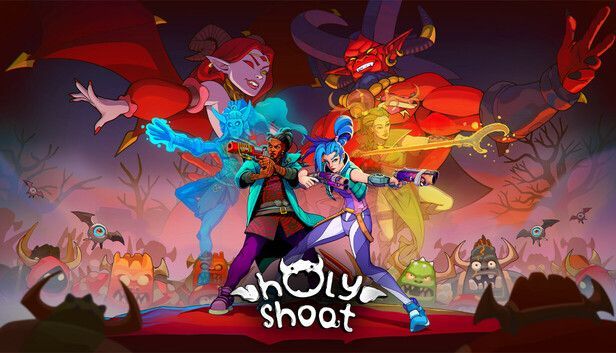
From my own experience working on indie projects, the foundation is set early. On Heroes Chained for mobile and Holy Shoot for PC, the core world concept came from the leadership team, and my role as Lead Storywriter was to build out the lore, characters and history. That process only works when there is continuous feedback between designers, artists and writers.
The Game Designer is the conduit between all the team members and the management and is central to the formula for indie game success.
What keeps indie teams aligned
- A clearly defined vision: A team must understand what the game is trying to achieve from the outset.
- Strong leadership and direction: The lead game designer or producer connects all parts of the team.
- Regular communication loops: Feedback flows between departments, not in silos. That link-up between team members is vital to the success of the game.
- Cross-discipline collaboration: Story, gameplay and art must evolve together, not separately. Otherwise, the game project will feel disjointed and unaligned.
- Iterative development: Ideas are tested, refined and improved as a team. This is at the heart of indie game development success.
Key Takeaways
The outcome is consistency. When teams are aligned, the final game feels cohesive rather than fragmented. For indie studios, that cohesion is often the difference between a good idea and a successful product.
7. Why do indie games need strong infrastructure and servers?
Indie studios often prioritise design and community, but infrastructure determines whether a game performs under real-world conditions.
The difference between a short-lived launch and a scalable title usually comes down to stability, latency and cost control. We explored the importance of colocation services for indie game companies in article two in this series.
What IP House London Colocation Services Provides
Colocation at IP House London gives developers dedicated hardware inside a Tier III data centre, removing the unpredictability of shared cloud environments. Instead of competing for resources, your game runs on consistent infrastructure, which translates into smoother sessions and more reliable performance for players across the UK and Europe.
The Hybrid Model Most Studios Use
The most effective setup is not cloud or colocation, but both. Studios typically run login systems, authentication and traffic spikes in the cloud, while placing core systems such as game servers, databases and real-time simulation on colocated machines. This balance allows flexibility without sacrificing control.
Real Indie Example: Valheim
A strong example of this approach is Valheim. When it launched in 2021, it scaled rapidly to millions of players within weeks. Instead of relying purely on centralised cloud servers, the developers leaned heavily on dedicated server architecture, allowing communities and hosts to run the game on their own hardware or colocated environments.
We also spoke about Valheim in our second article in this series on hosting and servers.
This model delivered two key advantages:
- Performance remained stable even as player numbers surged
- Costs were distributed and controlled rather than spiralling with usage
In practice, many hosting providers and communities ran Valheim servers on colocated machines to ensure low latency and consistent uptime. This decentralised, hardware-controlled approach mirrors the same logic behind colocation: control the environment, and you control the experience.
Core Technical Advantages
Colocation services at IP House deliver clear operational benefits that directly affect gameplay:
- Consistent performance without resource throttling
- Lower latency through London Docklands connectivity
- Predictable costs as player numbers grow
- Hardware optimisation aligned with your game engine
- Performance and latency affect player experience. Even a 100–200ms delay can increase player drop-off and uninstall rates, directly impacting retention and store rankings.
Impact on Player Experience and ASO
These technical choices are not abstract. They shape the player experience immediately. Lower ping, fewer disconnects and stable matchmaking increase session time and retention. In practical terms, this strengthens App Store performance, as uninstall rates drop and engagement signals improve.
Scaling Without Breaking Your Game
Scaling is where many indie projects fail. A sudden spike in users can overwhelm infrastructure or trigger unsustainable cloud costs. With colocation, you can plan capacity, maintain performance under load and upgrade on your own timeline rather than reacting to problems.
Key Takeaways
If the goal is to build an indie game that lasts beyond launch, infrastructure cannot be treated as a backend detail. It is part of the product itself, shaping performance, player satisfaction and long-term growth. Colocation is a core component of the formula for indie game success.
Final Reflections
We have come to the end of our journey exploring the formula for indie game success. This article was a joy to research and write, as it was a trip of nostalgia through some of my favourite games since the 1980s.
Indie game success is derived from a combination of creative vision, thoughtful design, and strong engagement with players. Indie games do not need huge budgets and teams to compete on the same playing field as big publishers.
It is through innovation, creativity, and the ability to make decisions faster that indie games can thrive.
Long may indie games reign!
Are you an indie game studio or publisher? Would you like to find out more about Colocation services in London? Please fill out the Contact Form below.
FAQs: Formula for Indie Game Success
What is the formula for indie game success?
A strong core mechanic, clear identity, engaging story, active community, scalable monetisation, aligned teams and reliable infrastructure.
What makes a successful indie game stand out?
A clear gameplay hook, distinctive art style and a focused, memorable player experience.
How important are game mechanics in indie games?
They are critical. A simple, repeatable core loop drives retention and long-term engagement.
Why is community engagement important for indie games?
It builds visibility, improves the game through feedback and increases player loyalty.
How do indie games scale after launch?
Through stable infrastructure, regular updates and additional revenue streams like merchandising.
Author Bio
Jamieson Lee Hill, MD of Gold Viking Limited, is a Video Game Story Writer and Narrative Designer who has worked on various indie games and gaming projects:
- Heroes Chained on Mobile with Inventuna Games
- Holy Shoot on PC with Tale Era Interactive
- Hunters-On-Chain by Boomland, writing articles with game lore contributions.
- Human No More, a new Tabletop RPG; editorial and acting
- Savage Turret on PC, currently working with the developer as Story Writer and providing in-game music with my band NEXUS XIII.
- Currently, with a new indie game studio working on a new fantasy title.
Sources
How This Indie Game Made 60% of Its Annual Merch Revenue in 30 Days
The 5 Elements That Make A Successful Indie Game - Ludo.ai
A Case Study on What Makes a Successful Indie Game
Tips On Developing Successful Indie Games in 2025
How to Make a Somewhat Successful Indie Game
11 Inspiring Game Design Quotes
5 Powerful Steps to Turn a Simple Game into a Full-Time Career
Contact Us